
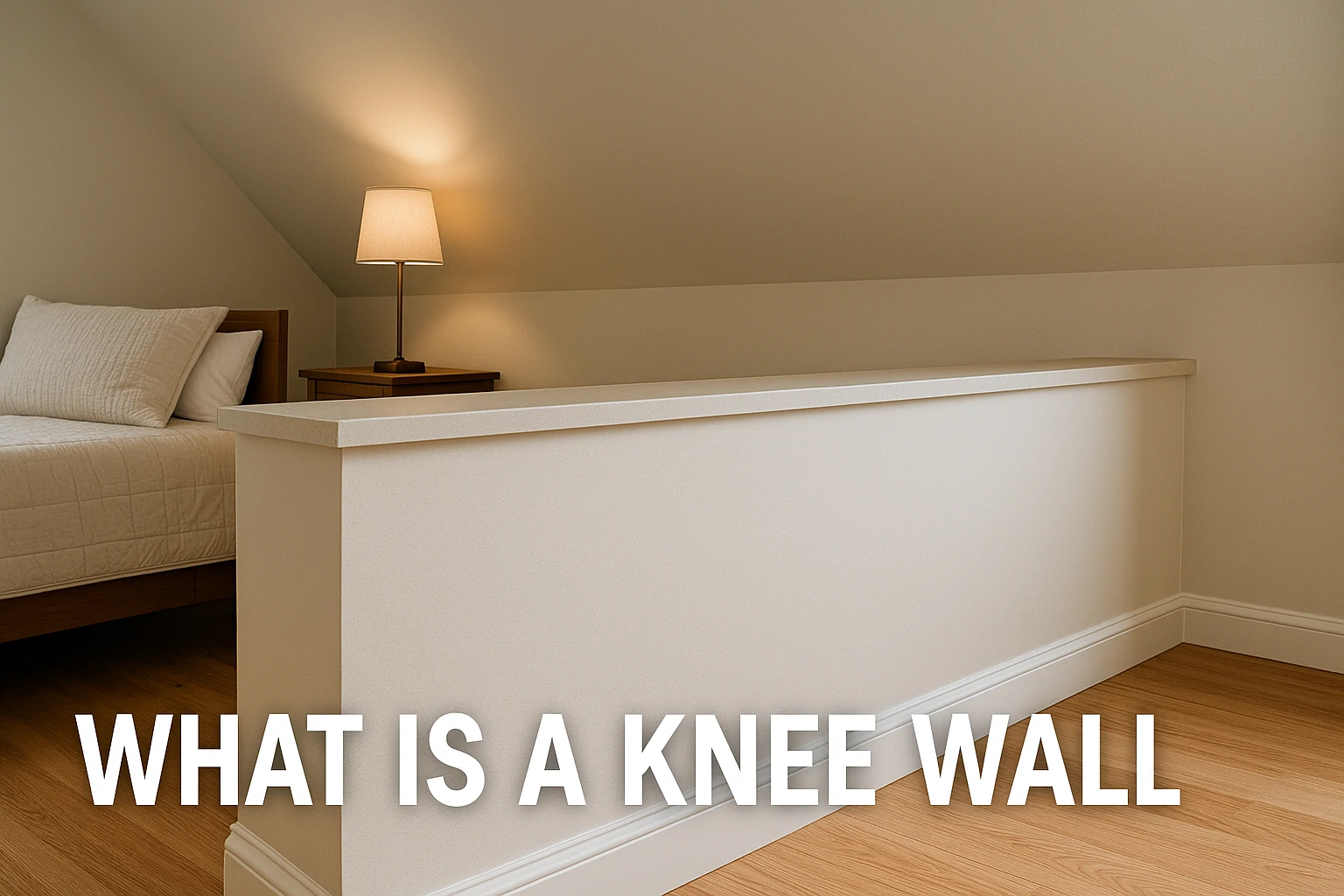
Most people walk through attics or upper floors and see a short wall under the sloped roof. It seems small and easy to ignore. But it often plays a big part in how the room works. This wall is called a knee wall.
A knee wall helps shape a room. It gives structure and support. It also hides storage, wiring, and insulation. Some are part of the roof support. Others simply finish the look of the space.
Knee walls show up in many areas of the home. You can find them in attics, bathrooms, stairs, and basements. They serve many uses in both new and old buildings. They help homeowners use every inch of space.
This guide will give clear answers. You will learn what a knee wall is, where to find it, how to use it, and when to build one. Real examples will show how these walls improve design and function. If you plan to build or renovate, this article will help you decide what works best.
What Is a Knee Wall in a House?
A knee wall is a short vertical wall found beneath a sloped ceiling. It often stands two to four feet high. Builders place it where the roof starts to angle steeply.
The name comes from the way it sits partway between floor and ceiling, much like a bent knee. It adds a finished edge to rooms with angled roofs. It can also hide storage or hold insulation.
Many people first notice knee walls in attic bedrooms. These walls turn a rough attic into a usable room. They cover rafters and give the ceiling a clean finish. Homeowners may also add doors or panels to the wall to create hidden storage.
Some knee walls help support the roof. Others just mark the edge of living space. They are common in Cape Cod-style homes and other sloped-roof layouts.
What Does a Knee Wall Look Like?
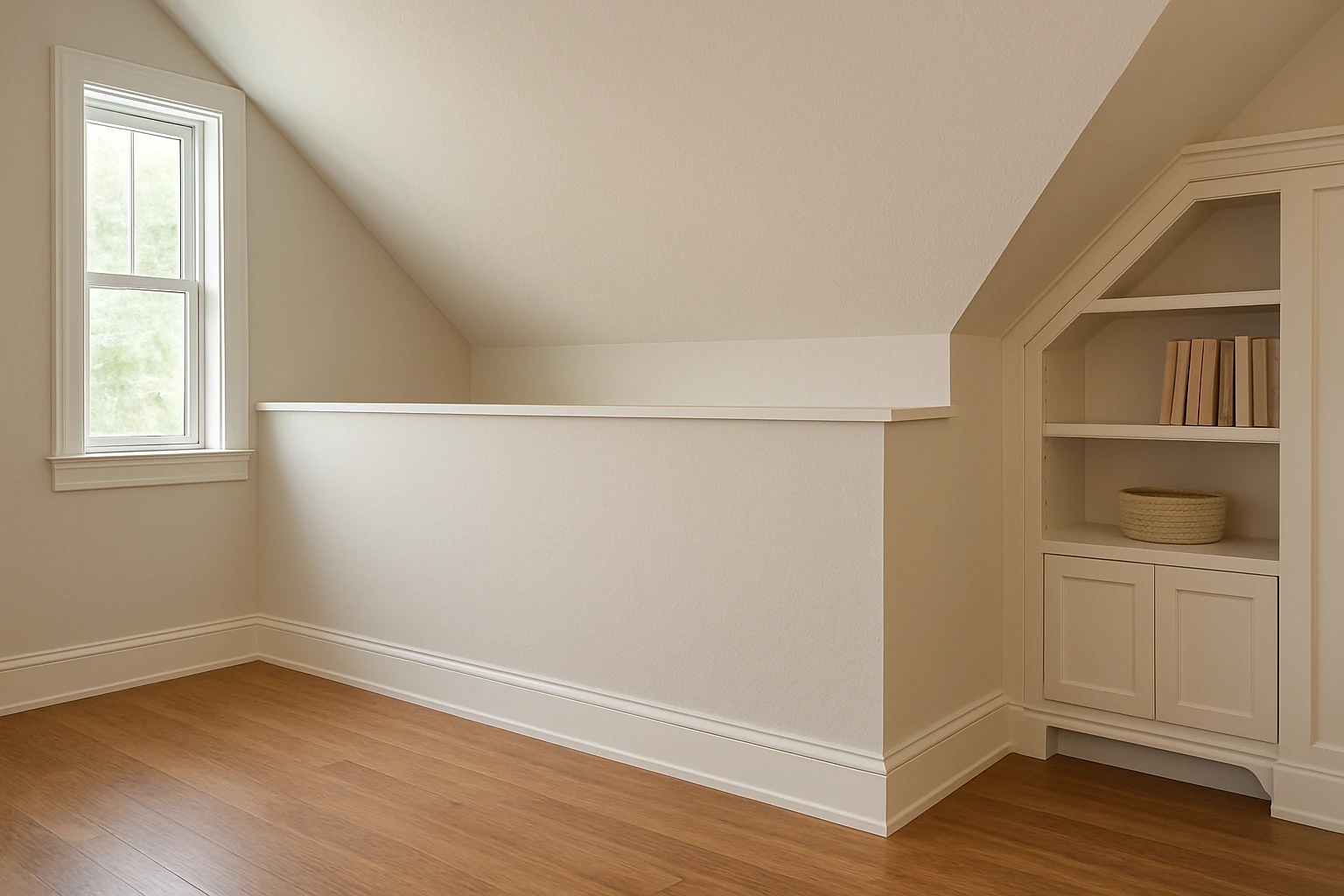
A knee wall looks like a short, straight wall sitting beneath a sloped ceiling. It often runs along the lower edge of a roofline and ends a few feet above the floor.
It may be plain drywall or dressed up with trim, paint, or panels. Some look like part of the room’s structure. Others include access doors or built-in shelves.
In attic bedrooms, the wall meets the slope and makes the space feel complete. In bathrooms or stairways, it forms a neat base for glass, fixtures, or rails.
Every knee wall fits its space. The size, finish, and shape all depend on the room’s purpose and roof angle.
What Is a Knee Wall Used For?
Here are the most common uses of a knee wall:
- Support the roof
- Add insulation
- Create hidden storage
- Shape the room
- Hide wires and pipes
Each of these uses improves the way a room works. A knee wall can turn an awkward space into a smart design solution.
Knee Wall vs Pony Wall
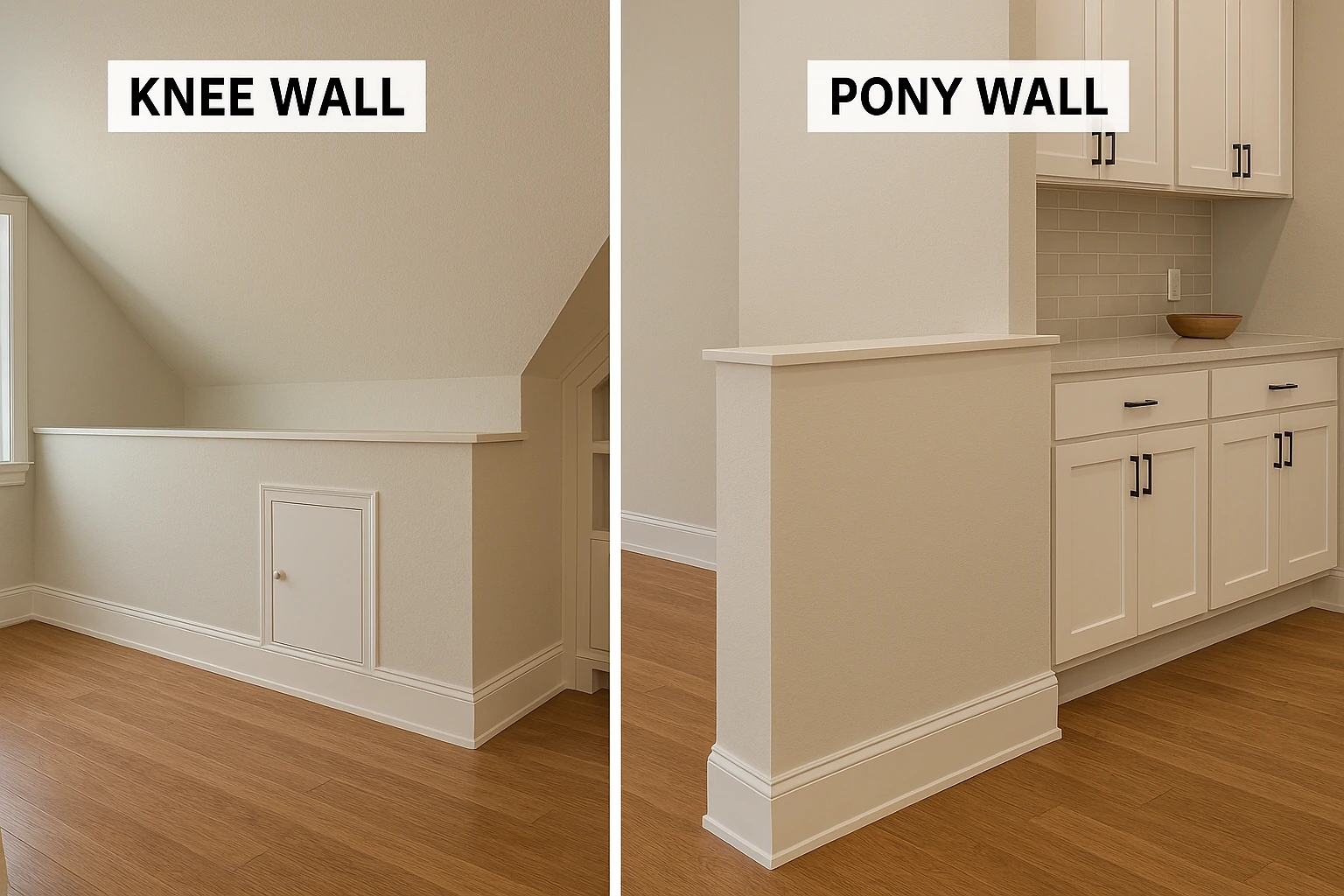
Knee walls and pony walls look alike at first. Both are short. Both stop before reaching the ceiling. But they serve different jobs.
Knee Wall
- Sits below a sloped ceiling
- May help support the roof
- Often hides storage or wires
Pony Wall
- Sits in a room with a flat ceiling
- Often acts as a divider
- Common in kitchens, bathrooms, and stairs
A pony wall divides space. A knee wall shapes the room where the roof slants. One helps flow, the other creates form.
Knee Wall vs Cripple Wall: Know the Difference
A cripple wall is also short, but it sits in a different part of the house. It often supports the floor above a crawl space or basement.
Knee walls go under sloped ceilings. Cripple walls go beneath floor joists in areas with raised foundations. They help support weight and resist side-to-side movement.
Cripple walls are part of the lower structure. Knee walls shape upper rooms and may or may not carry load. Both serve key roles, but in very different places.
Understanding this difference can help you avoid mistakes during remodeling or repairs.
What Is a Knee Wall on Stairs?
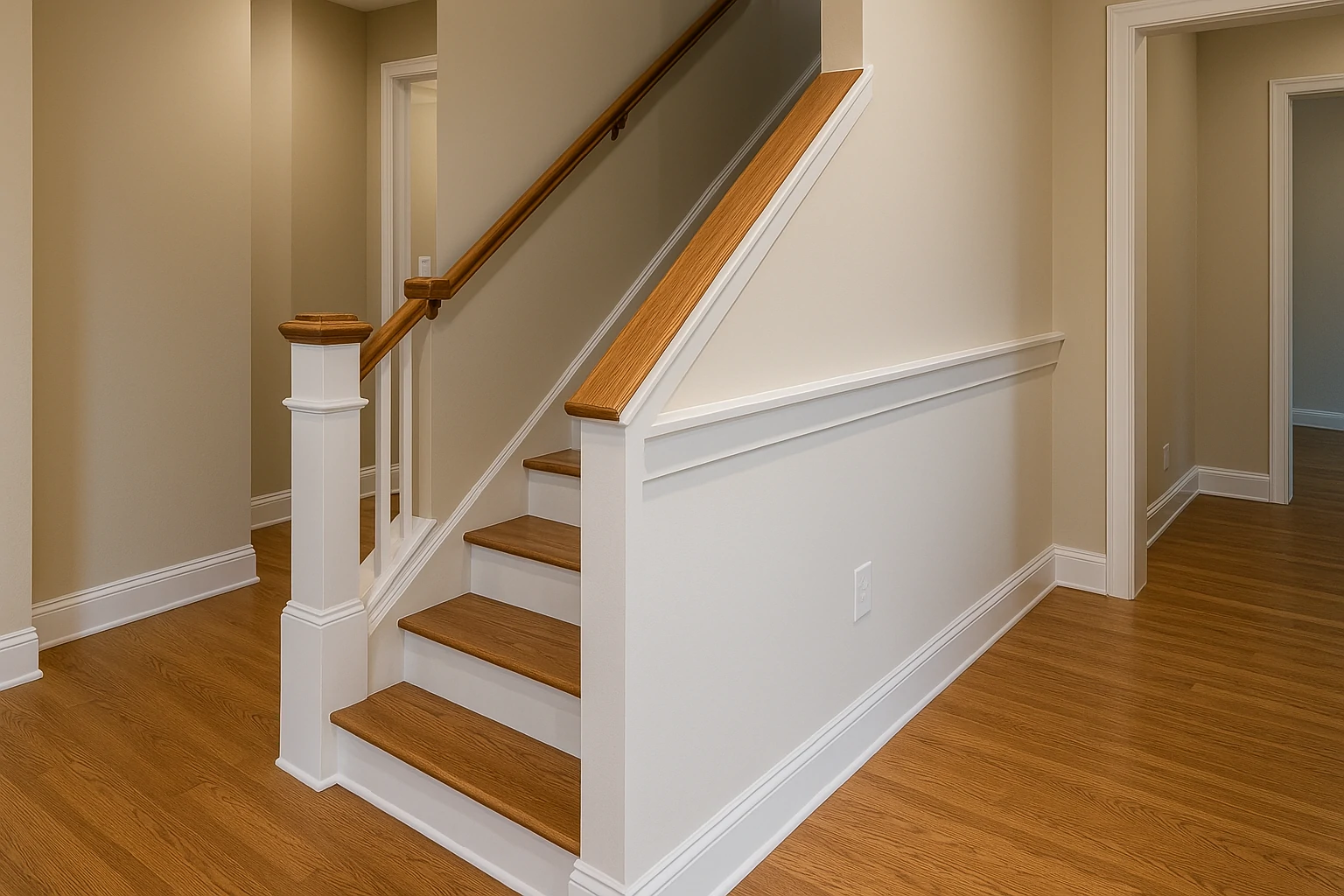
A stair knee wall runs along the side of a staircase. Many homes use it instead of railings. It adds safety, support, and style all in one place.
This short wall follows the angle of the stairs. It acts as a barrier to protect people from falling. It creates a strong edge that makes the stairs feel more enclosed and secure. In homes with small children or pets, this added protection can be very helpful.
Builders often add outlets, light switches, or low-profile lighting to the stair knee wall. Some use it as a support for a wooden or metal handrail mounted on top. It can also hold trim that matches the walls or floors nearby. This helps the stairs blend into the overall look of the home.
In split-level homes, stair knee walls are common between short flights of stairs. They define the transition between floors without breaking the flow of the space.
In open-concept homes, they provide structure while still allowing light and movement through the rooms. A stair knee wall can be plain and functional or dressed up with woodwork, paint, or stone to match the interior design.
What Is a Knee Wall in a Bathroom?
Bathrooms with sloped ceilings often include knee walls to fill the low space beneath the angle. These short walls help shape the room and create a layout that feels open and usable.
A knee wall may sit next to a tub, toilet, or walk-in shower. It can serve as a barrier to block water, hold a glass panel, or divide the wet area from the rest of the bathroom.
Some knee walls frame vanities, cover plumbing, or hold towel bars and small shelves. In tight attic baths, they support fixtures that would not fit against a full wall.
Homeowners use them in upper-floor bathrooms to turn awkward corners into useful zones. When planned well, a knee wall adds both support and clean style to the space.
Knee Wall Height for Shower
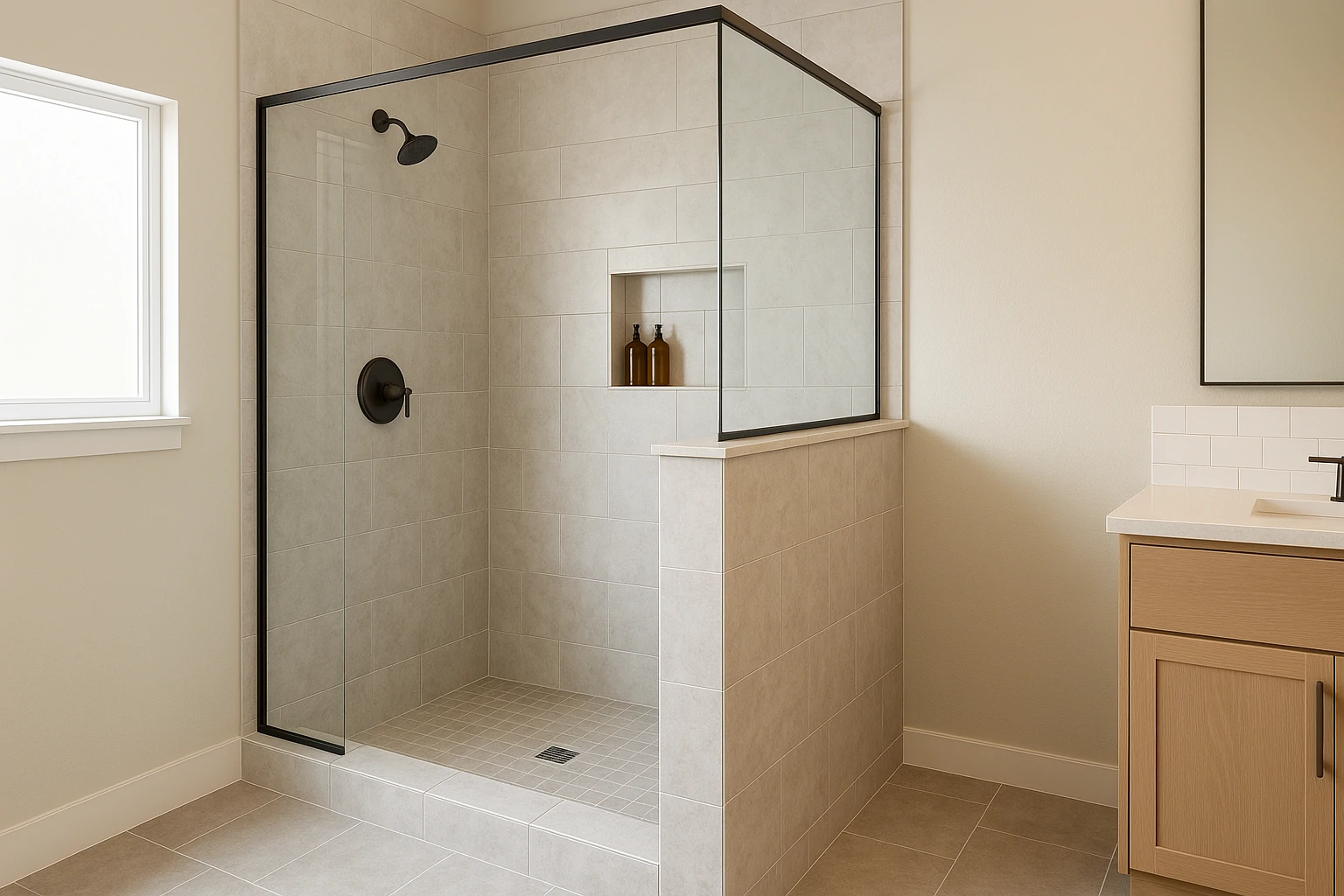
Shower knee walls usually measure between 36 and 48 inches tall. This range offers enough height to block water and support glass panels without feeling too closed in.
The best height often depends on the layout of the bathroom. Some walls align with nearby vanities for a smooth, balanced look, while others sit slightly lower to allow space for soap niches or built-in ledges.
Many modern showers feature a glass panel on top of the knee wall. This design keeps the space bright, lets in light, and still provides a clear divide between zones.
Knee walls also help trap warmth and prevent drafts in the shower. They separate wet and dry areas without needing a full wall, giving both comfort and open space.
What Is a Knee Wall in a Shower?
A knee wall in a shower is a short divider placed between wet and dry zones. It often sits on one side of a walk-in shower, close to the entry.
Some walls support a glass panel or hold small shelves for soap and shampoo. Others act as barriers to keep water from splashing into the room.
This wall may line up with the vanity, floor trim, or nearby plumbing. Some are tiled to match the rest of the shower. Others stay simple to keep the look clean.
Shower knee walls help define space, block drafts, and give you more comfort without closing off light or airflow.
You can also enhance the look with unique touches like wood wall art decor, which adds warmth and texture to plain surfaces.
What Is a Knee Wall in Basement?
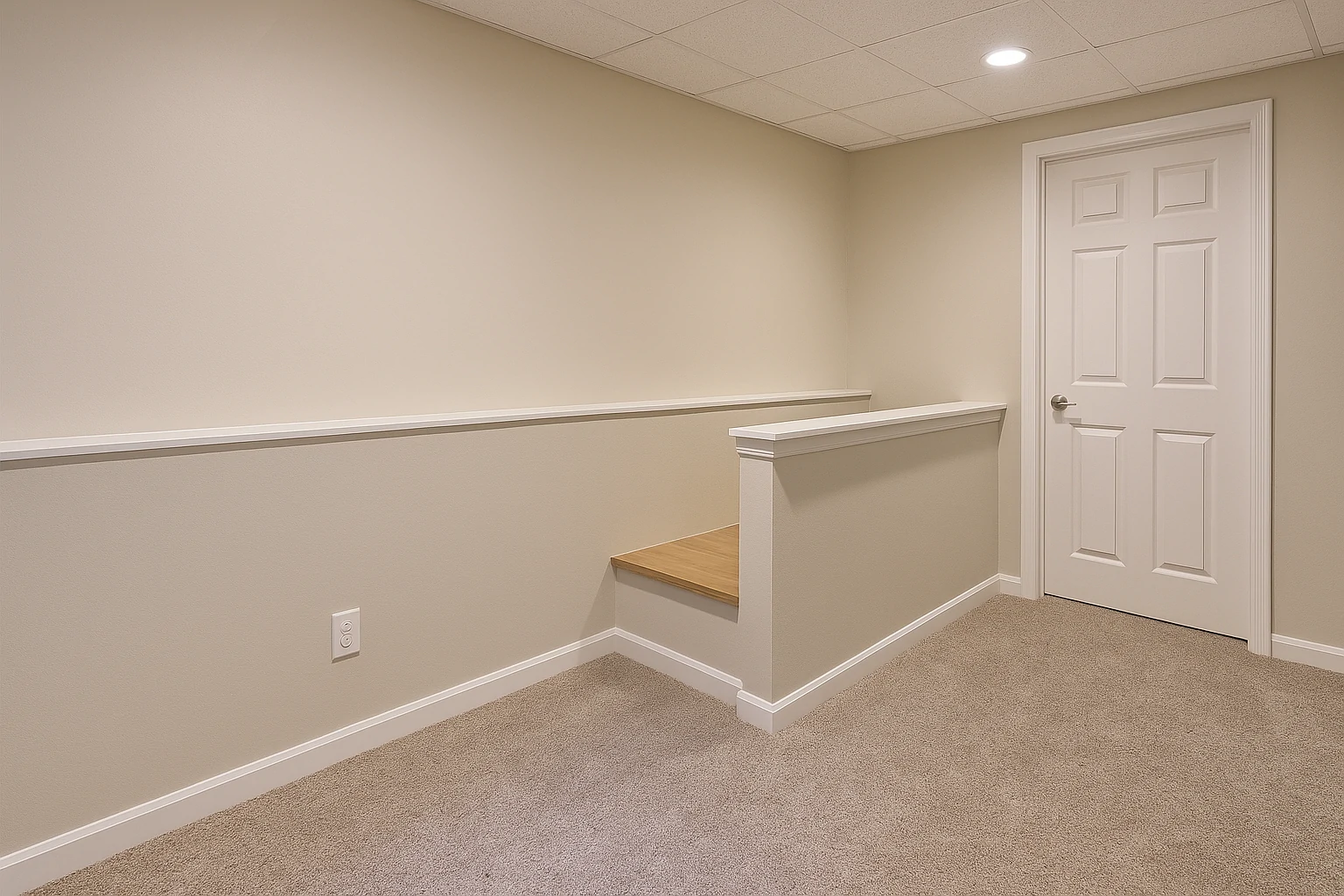
Some basements have low ceilings, uneven floors, or sloped outer walls. A knee wall helps shape these spaces and make them more usable and finished.
These short walls can hide pipes, wires, or air ducts that run along the edge of the room. They also provide support for built-in benches, shelves, or cabinets.
In walk-out basements, knee walls often fill the base of a sloped exterior wall. This gives a flat surface for paint, outlets, trim, or even seating along the wall.
Contractors use knee walls to improve layout in finished basements. They clean up awkward corners, add storage space, and help guide the flow of the room.
What Are Knee Wall Panels?
Knee wall panels are small doors or covers placed on the front of a knee wall. They allow access to the hidden space behind, which may hold storage, wires, or ductwork.
Some panels open like cabinet doors, while others slide or lift out easily. Builders often match the panel’s trim or paint to the rest of the room for a seamless look.
These panels help homeowners use every inch of space without tearing into walls. They also let you hide clutter while keeping it easy to reach when needed.
Knee wall panels make repairs simple. If you need to check pipes, wiring, or insulation, you can open the panel without damaging drywall or finished surfaces.
Is a Knee Wall Load Bearing?
Some knee walls support the roof, while others do not. You must know the difference before making any changes.
A load-bearing knee wall lines up with rafters or roof framing. It helps carry weight from above and adds strength to the structure.
A non-load-bearing knee wall simply shapes the room or hides storage. You can remove it more easily, but it’s still best to check first.
Never assume. Always ask a contractor or structural expert before cutting or removing any wall. One mistake can lead to costly damage.
How to Strengthen a Load-Bearing Knee Wall
Use studs placed close together to support roof weight. Anchor the base of the wall firmly to the floor with lag screws or brackets.
Add blocking between the studs for more strength. Use structural sheathing like plywood on one side to hold it all together.
Make sure it lines up with rafters above and framing below. If needed, consult a contractor to add beams or braces for added support.
A strong knee wall keeps the roof stable and makes the home safer in high winds or heavy snow.
Real Home Uses for Knee Walls
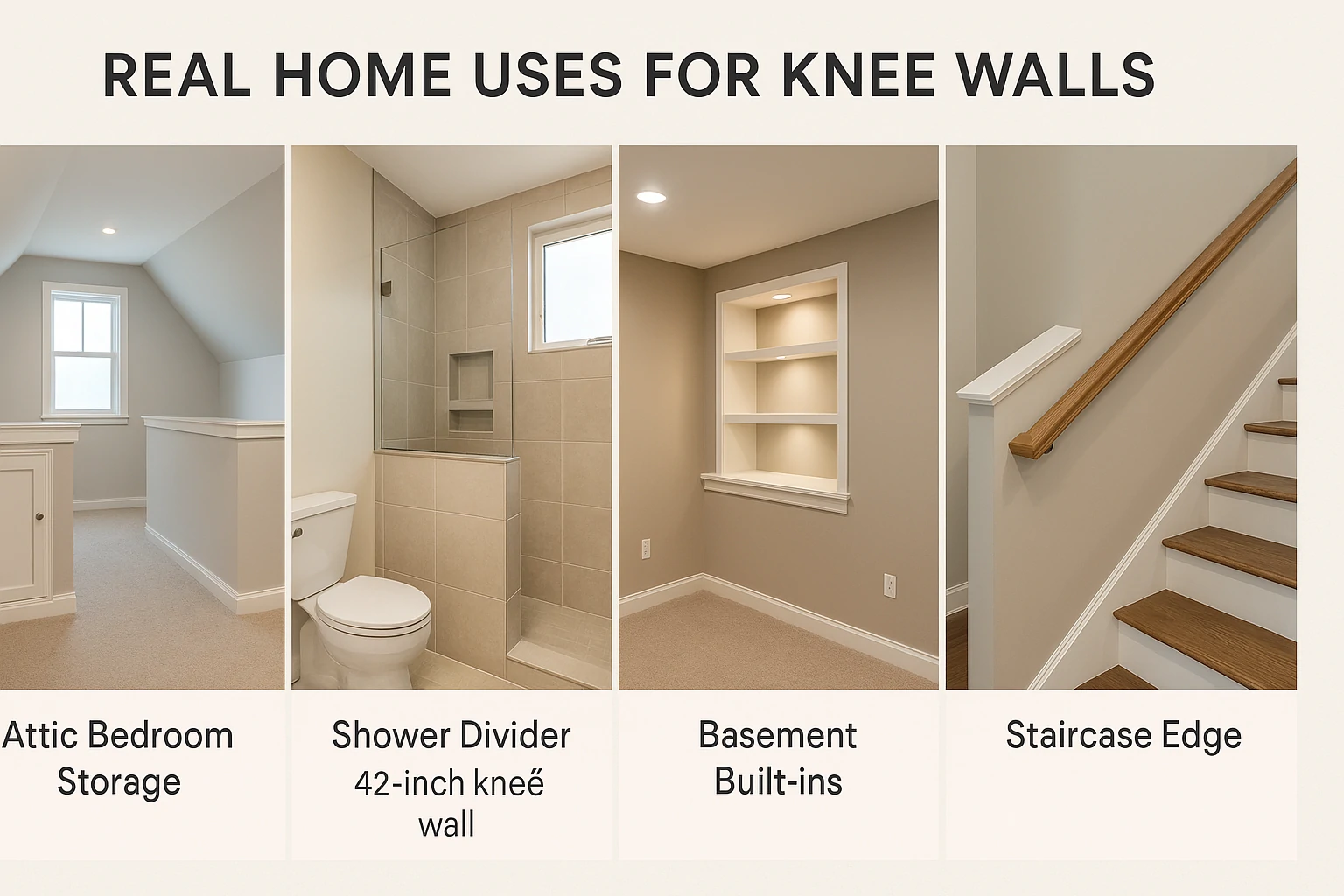
Attic Bedroom Storage
A builder turned an attic into a clean, finished bedroom with two knee walls. Small hidden doors open to crawl-space storage, making the room neat and fully usable.
Shower Divider
In a small upstairs bathroom, a 42-inch knee wall supports a glass shower panel. It blocks water from the dry zone while keeping the space light and open.
Basement Built-ins
A finished basement features a knee wall along one side under a sloped area. It holds custom shelves, accent lighting, and trim work that ties the space together.
Staircase Edge
A stair knee wall replaces traditional railings for a sleek look. It holds electrical switches and blends perfectly with the wall design of the lower level.
A knee wall acts like a low divider, shaping open areas without closing them off. You can explore more room divider ideas to balance privacy and space.
Final Tips Before You Build or Remove a Knee Wall
- Know your roof slope
- Use strong studs and framing
- Add insulation in cold areas
- Plan access if hiding storage or wires
- Match height to nearby counters or fixtures
- Never remove a wall without checking load
- 💬 “Took 1 Day, Made a Big Difference”
Many homeowners use knee walls as weekend DIY projects. Done right, they add charm, storage, and safety -without the need for full remodels.
Conclusion
A knee wall may seem like a small feature, but it adds real value to your home. It supports roof lines, finishes attic spaces, hides wires, and creates hidden storage. You can find it in many places-attics, stairs, bathrooms, and even basements.
Some knee walls carry weight and help keep the structure strong. Others help shape tight spaces, support built-ins, or divide wet and dry areas. No matter the purpose, they make homes more practical, balanced, and easier to live in.
With smart design, a knee wall blends into the room while still doing an important job. It helps you use space that would otherwise stay empty or awkward. From blocking water in a shower to holding lights along a stairway, this wall does more than most people realize.
Use this guide when planning your next upgrade or remodel. Think about where a knee wall could help, how tall it should be, and whether it needs to carry weight. One well-placed wall can turn unused space into a feature that improves both style and function.
Knee walls help small spaces feel larger and cleaner. For more ways to design compact areas with style, see interior ideas for small homes